Sidewalks, Walkways & Flatwork
Safe, attractive pathways that connect your property and enhance curb appeal.
Why Quality Sidewalks and Walkways Matter
The paths around your property do more than just give you somewhere to walk. Sidewalks and walkways guide traffic, define spaces, improve safety, and contribute to your home's overall appearance. A well-built walkway makes your property more accessible and inviting while reducing mud, grass wear, and the mess that comes from people cutting across your lawn. Whether you need a simple path from your driveway to your front door or an elaborate network of walkways connecting different areas of your property, quality concrete flatwork delivers lasting value.
In Dania Beach, sidewalks and walkways need to handle heat, humidity, heavy rain, and constant foot traffic. Poorly installed paths settle, crack, and become trip hazards within a few years. Tree roots push up sections, creating uneven surfaces that are dangerous and ugly. Water pools in low spots because the slope was not done right. These problems do not just appear randomly. They result from cutting corners during installation, skipping proper base preparation, or not planning for drainage and settling.
We build sidewalks and walkways that stay level, drain properly, and look good for decades. Our process includes proper excavation, base compaction, reinforcement, and careful attention to grade and slope. We plan routes that make sense for your property, coordinate with landscaping, and create transitions that work with your driveway, patio, and other concrete surfaces. You get pathways that are safe to walk on, easy to maintain, and built to last through years of daily use and Florida weather.
Types of Concrete Flatwork We Install
Flatwork is the term for any concrete surface installed at or near ground level. This includes sidewalks, walkways, pathways, aprons, and other horizontal surfaces. Each type serves a specific purpose and requires appropriate design and construction techniques. Here are the most common types of flatwork we install.
Public Sidewalks
Public sidewalks run along streets and connect properties to public walkways. These typically need to meet specific code requirements for width, thickness, slope, and ADA accessibility. We handle all permit requirements and build sidewalks that pass inspection the first time. Public sidewalks also need to accommodate utility access and coordinate with existing infrastructure like street trees, utility poles, and drainage systems.
Private Walkways
Private walkways connect different areas of your property. Common routes include paths from the driveway to the front door, from the back door to the patio, or from the house to a detached garage or shed. Private walkways give you more design flexibility than public sidewalks. You can choose the width, finish, and route that works best for your needs. We help you plan walkways that are practical, safe, and attractive.
Garden Paths and Decorative Walkways
Decorative walkways enhance your landscaping and create visual interest in your yard. These paths can wind through gardens, circle around features, or create defined routes through larger properties. We can add curves, decorative finishes, borders, and integrated lighting to create pathways that are both functional and beautiful. Garden paths work great with stamped patterns, exposed aggregate, or colored concrete that complements your plants and outdoor spaces.
Driveway Aprons and Transitions
The apron is the section where your driveway meets the street or sidewalk. This area needs to be built to withstand heavier loads and often requires specific slopes and grades. We build driveway aprons that integrate seamlessly with your driveway and meet all code requirements. Aprons also need to coordinate with street drainage and utility access, which we factor into our designs.
ADA-Compliant Ramps and Paths
If you need wheelchair accessibility, we build ADA-compliant ramps and pathways. These installations require specific slopes, widths, landing areas, and handrail provisions. We understand accessibility requirements and build ramps that meet code while integrating well with your property. Proper ramp construction ensures safe, easy access for wheelchairs, walkers, and anyone with mobility challenges.
Our Installation Process for Sidewalks and Walkways
Installing sidewalks and walkways requires careful planning and precise execution. Every project is different, but we follow the same systematic approach that ensures your flatwork will be level, properly drained, and built to handle years of use. Here is how we build sidewalks and walkways.
- Site Survey and Layout: We measure and mark the route for your sidewalk or walkway. This includes checking elevations, locating underground utilities, and planning around trees, landscaping, and other features.
- Route Planning: We help you determine the best path for your walkway. This considers how people naturally move through your property, where water drains, and how the path connects to other surfaces.
- Excavation and Base Prep: We dig out the path to the required depth, typically 6 to 8 inches. Proper excavation ensures a stable base and room for adequate concrete thickness. We compact the soil and install a gravel base that provides drainage and prevents settling.
- Forms and Grade: We build forms to contain the concrete and establish proper grade. Walkways need to slope slightly for drainage, usually about 1/4 inch per foot. We also plan for transitions where the walkway meets other surfaces or changes elevation.
- Reinforcement: We install wire mesh or rebar to reinforce the concrete. This is especially important for wider sidewalks or areas that will see heavy traffic. Reinforcement prevents cracking and adds structural strength.
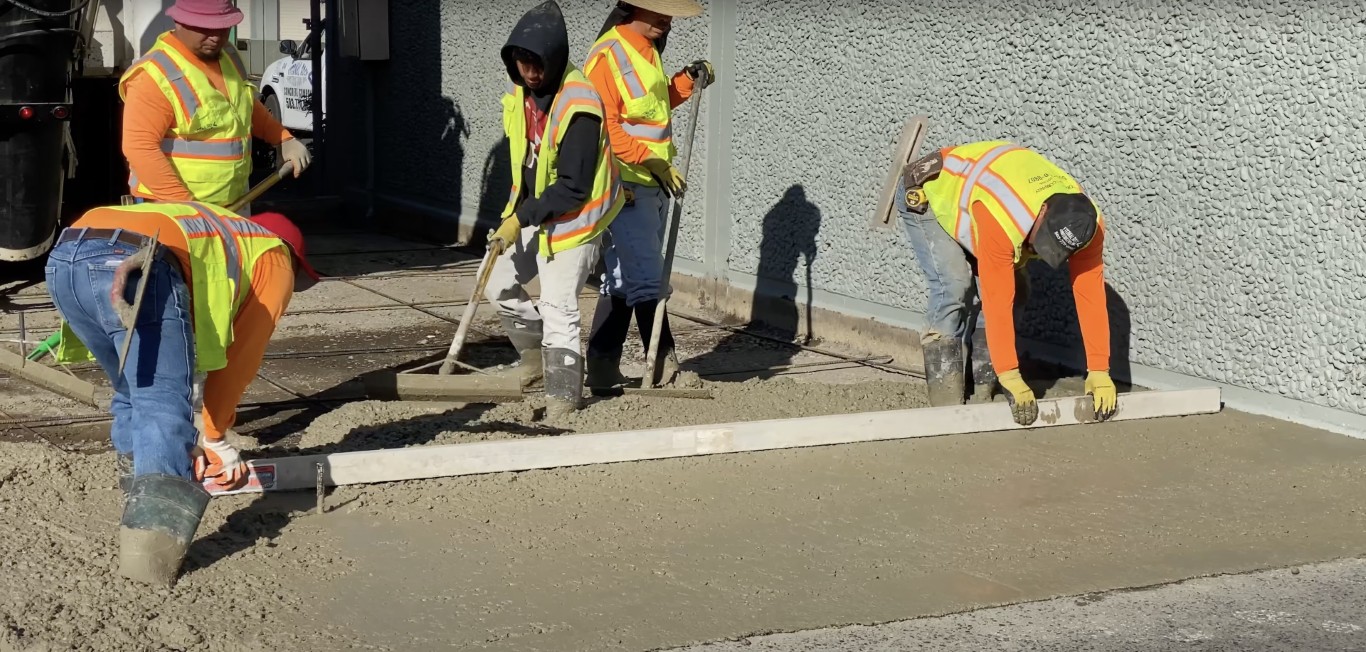
- Concrete Pour and Finish: We pour concrete mixed to the right specifications for flatwork. Our crew spreads, levels, and finishes the surface according to your chosen finish. This might be a broom finish for traction, smooth finish for a clean look, or decorative finish if you want something special.
- Control Joints and Edging: We cut control joints to manage cracking and create clean edges along the sides of the walkway. Joints also break up long runs of concrete into manageable sections.
- Curing and Cleanup: The concrete is protected while it cures, and we clean up all debris and excess materials. You get a finished walkway that is ready to use in a few days.
Most sidewalk and walkway projects take 2 to 4 days from start to finish. We work efficiently and keep your property clean throughout the process. If your project requires permits or inspections, we handle that paperwork and coordinate with local authorities.
Design Considerations for Functional Walkways
A good walkway is more than just a strip of concrete. It needs to be wide enough for comfortable use, properly sloped for drainage, and designed to handle your specific needs. Thinking through these details during planning ensures you get walkways that work well and last. Here are key design factors we consider for every project.
Width matters for walkways. A standard public sidewalk is typically 4 to 5 feet wide, which allows two people to walk side by side comfortably. Main walkways to front doors should be at least 3 feet wide, preferably 4 feet for easier access with wheelchairs or strollers. Secondary garden paths can be narrower, around 2 to 3 feet. Wider paths feel more inviting and handle traffic better, while narrow paths work for less-used routes.
Slope and grade control drainage and accessibility. Walkways need enough slope to drain water but not so much that they become difficult or dangerous to use. A slope of 1 to 2 percent (about 1/4 inch per foot) works for most walkways. Steeper slopes may require steps or ramps. We also consider cross-slope to direct water off the path rather than letting it run down the center. Proper grading prevents puddles, ice formation, and water damage to the concrete.
Transitions and connections need careful attention. Where your walkway meets the driveway, patio, or other surfaces, we create smooth transitions that do not create trip hazards. Changes in elevation are handled with ramps or steps as appropriate. We also plan for how water flows across these transitions to avoid creating drainage problems.
Surface finish affects safety and appearance. Broom finish provides good traction and works for most applications. Smooth finishes look sleek but can be slippery when wet. Decorative finishes add visual interest and can tie your walkway into your overall landscape design. We help you choose a finish that balances appearance, safety, and maintenance requirements.
Landscaping integration makes walkways look intentional rather than afterthought. We coordinate with existing plants and plan for future landscaping. This includes leaving appropriate space for tree roots, creating edges for planting beds, and positioning the walkway so it complements your yard design. A well-planned walkway enhances your landscaping and increases the overall appeal of your property.
Frequently Asked Questions About Sidewalks and Walkways
Ready to add safe, attractive walkways to your property?
Get in touch today for a free consultation and quote on your sidewalk or walkway project.