Concrete Slab & Foundation Work
Solid foundations and slabs built right the first time for lasting structural integrity.
Why Foundation Work Matters
Your foundation is literally what holds your building up. Whether you are constructing a new home, adding a garage, building a shed, or installing equipment that needs a solid base, the quality of your concrete slab or foundation determines how well that structure performs over time. A poorly built foundation leads to settling, cracking, doors that do not close properly, and expensive repairs down the road. A well-built foundation gives you decades of trouble-free service and protects your investment.
In South Florida, foundation work requires special attention to soil conditions, water tables, and local building codes. Dania Beach sits in an area with sandy soil, high humidity, and seasonal heavy rain. These factors all affect how we design and pour foundations. We do not use cookie-cutter approaches or shortcuts. Every foundation job starts with proper site evaluation, soil testing if needed, and careful planning to ensure the finished slab meets structural requirements and handles local conditions.
We have built foundations for homes, garages, sheds, pool equipment pads, air conditioning units, and commercial structures throughout Dania Beach. Our crew understands the engineering behind foundation work and follows best practices for excavation, reinforcement, pouring, and curing. When we finish a foundation job, you get a level, strong slab that meets code and provides a solid base for whatever you are building. That peace of mind is worth paying for quality work from experienced professionals.
Types of Concrete Slabs We Install
Different projects require different types of slabs. Understanding the options helps you choose the right foundation for your needs and budget. Here are the most common types of concrete slabs we install in Dania Beach.
Slab-on-Grade Foundations
Slab-on-grade is the most common foundation type in Florida. This involves pouring a single layer of concrete directly on prepared soil. The slab serves as both the foundation and the floor for the building. Slab-on-grade foundations are cost-effective, fast to install, and work well in areas without basements. We thicken the edges of the slab to provide extra support where walls will sit, and we add proper reinforcement throughout to prevent cracking. This type of foundation works great for homes, garages, workshops, and storage buildings.
Stem Wall Foundations
A stem wall foundation uses a concrete perimeter wall that sits on a footing below ground level. The slab is then poured inside the stem wall. This design provides extra protection against moisture and allows for better insulation under the slab. Stem walls work well for buildings that need to sit higher off the ground or require crawl space access. We use stem wall foundations for projects with specific drainage needs or when building codes require elevation above flood levels.
Floating Slabs and Equipment Pads
Floating slabs are smaller, independent concrete pads used for sheds, pool equipment, air conditioning units, generators, or storage areas. These slabs do not connect to the main building foundation but sit on compacted soil with proper drainage. Floating slabs need to be thick enough and reinforced properly to support the load without cracking. We build equipment pads to exact specifications so your HVAC units, pool pumps, or other machinery sit level and stable for years.
Post-Tension Slabs
Post-tension slabs use steel cables tensioned after the concrete cures. This technique allows for thinner slabs that resist cracking better than traditional reinforcement. Post-tension slabs work well for larger buildings or areas with challenging soil conditions. The process requires specialized equipment and training, and we have the expertise to handle post-tension foundation work when your project calls for it.
Our Foundation Installation Process
Building a solid foundation requires careful planning, precise execution, and attention to detail at every step. We follow a systematic process that ensures your foundation will be level, strong, and built to code. Here is how we approach foundation and slab work.
- Site Survey and Planning: We measure and mark the exact location of your foundation. This includes checking property lines, locating utilities, and verifying that the foundation layout matches your building plans.
- Excavation and Soil Prep: We excavate to the required depth, removing topsoil and organic material. Soil is compacted and leveled to create a stable base. If we encounter poor soil conditions, we address them before pouring.
- Formwork and Grading: We build forms to contain the concrete and establish proper elevation. Forms must be level and square, and we double-check all measurements before proceeding.
- Drainage and Utilities: We install any necessary plumbing or electrical conduits that run under the slab. Proper drainage systems are put in place to prevent water from pooling under your foundation.
- Reinforcement Installation: We place rebar or wire mesh according to engineering specifications. Reinforcement prevents cracking and gives the slab structural strength.
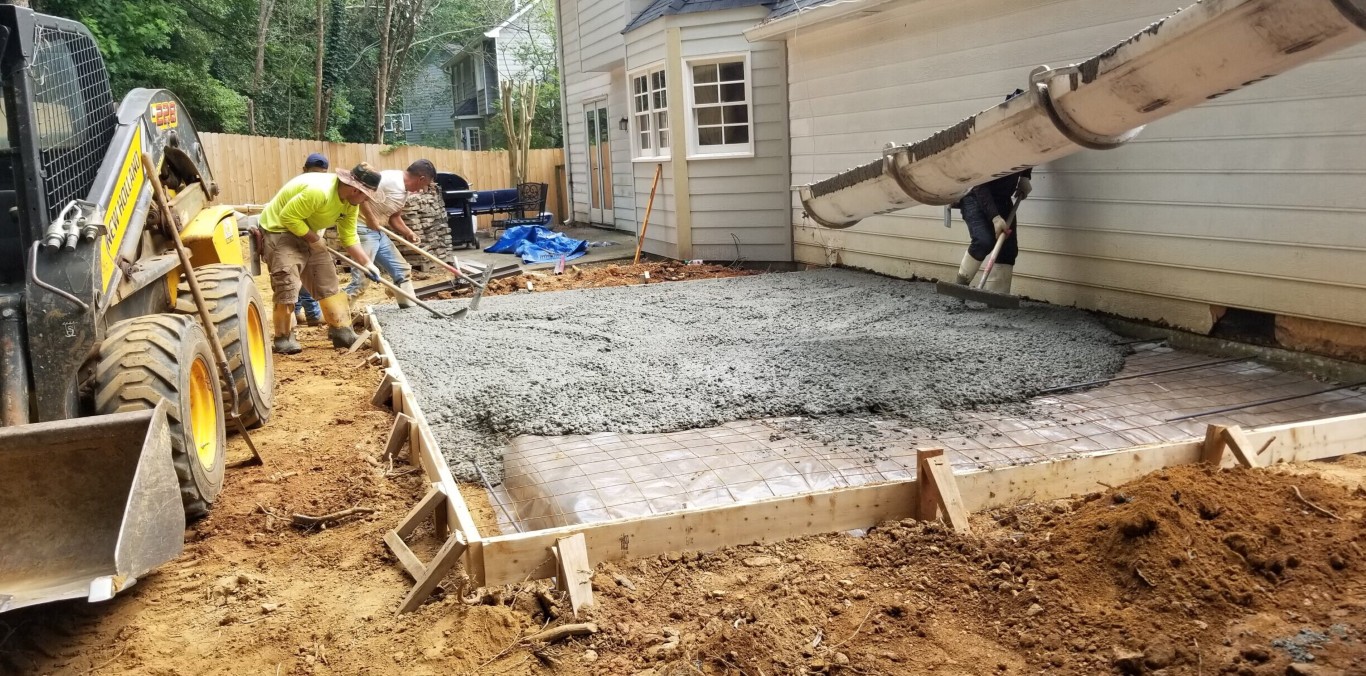
- Concrete Pour: We pour high-strength concrete mixed to the right specifications for foundation work. Our crew spreads and levels the concrete carefully, ensuring consistent thickness throughout.
- Finishing and Curing: We smooth the surface and add control joints where needed. The concrete is then protected while it cures, which takes several days. Proper curing is essential for achieving maximum strength.
- Inspection and Sign-Off: We coordinate inspections with local building officials to verify that your foundation meets all code requirements. You get documentation showing that the work passed inspection.
The entire process typically takes one to two weeks, depending on the size and complexity of your project. We keep you informed throughout and make sure you understand what is happening at each stage. Foundation work is not something you want rushed, and we take the time to do it right.
Building Codes and Permits
All foundation work in Dania Beach requires permits and inspections. Building codes exist to ensure that structures are safe, properly built, and able to withstand local conditions like hurricanes, flooding, and soil movement. Trying to skip permits or cut corners on inspections can lead to serious problems when you try to sell your property or if issues develop down the road.
We handle the permit process for you. This includes preparing drawings and specifications, submitting applications, paying fees, and scheduling inspections. Our team knows what local building officials expect, and we design and build foundations that pass inspection the first time. You do not have to worry about navigating bureaucracy or dealing with code requirements. We take care of everything and provide you with copies of all permits and inspection reports.
Florida building codes have specific requirements for foundation depth, reinforcement, drainage, and soil compaction. Foundations in flood zones have additional elevation requirements. Structures over certain sizes need engineering stamps. We stay current on all code changes and build every foundation to meet or exceed the standards. When you hire us for foundation work, you get a slab that is not just strong and level but also fully compliant with all applicable regulations.
Working with a licensed, insured contractor protects you legally and financially. If something goes wrong during construction, our insurance covers it. If the foundation does not meet code, we fix it at our expense. When you hire unlicensed workers or try to DIY foundation work, you take on all that risk yourself. Professional foundation work costs more upfront but saves you money and stress in the long run. You get it done right, inspected properly, and backed by professionals who stand behind their work.
Frequently Asked Questions About Foundation Work
Need a solid foundation for your project?
Contact us today for expert foundation and slab installation services.