Retaining Walls & Concrete Masonry
Strong, attractive walls that hold back soil and create usable outdoor spaces.
The Purpose and Benefits of Retaining Walls
Retaining walls do more than just hold back dirt. They prevent erosion, create level areas on sloped properties, protect foundations from water damage, and add visual interest to your landscape. If your property has any slope, a well-designed retaining wall can transform unusable hillside into functional outdoor space. Whether you need to level your yard for a patio, prevent soil from washing into your driveway, or create terraced garden beds, a properly built retaining wall solves the problem permanently.
In Dania Beach, retaining walls need to handle intense rain, high water tables, and sandy soil conditions. A poorly built wall will lean, crack, or collapse within a few years. The soil behind the wall pushes forward constantly, and water adds tremendous pressure during storms. Without proper design, drainage, and construction, that pressure overwhelms the wall. We see failed retaining walls regularly, usually because corners were cut during installation or the wall was not engineered for the actual loads it faces.
We build retaining walls that last. This means proper footings below the frost line, adequate reinforcement, drainage systems that remove water pressure, and construction techniques that handle the specific soil and water conditions on your property. Every retaining wall project starts with evaluating your site, understanding what the wall needs to do, and designing a solution that works. You get a wall that holds up year after year while looking good and protecting your property from erosion and water damage.
Types of Retaining Walls We Build
Different situations call for different types of retaining walls. The height of the wall, the soil conditions, the load it needs to support, and your aesthetic preferences all factor into choosing the right design. Here are the main types of retaining walls we install.
Poured Concrete Walls
Poured concrete retaining walls are the strongest option for large heights and heavy loads. We build forms, add reinforcement with rebar, and pour concrete to create a solid, monolithic wall. These walls can be finished smooth, textured, or covered with stone or stucco for appearance. Poured concrete works best for walls over 4 feet tall or situations requiring maximum strength. The construction process takes longer because of forming and curing time, but you get an extremely durable wall that can handle significant pressure.
Concrete Block Walls
Concrete masonry unit walls use concrete blocks stacked and filled with concrete and rebar. These walls are versatile, cost-effective, and can be built to various heights. Blocks can be left natural, painted, stuccoed, or faced with stone or brick for different looks. Block walls work well for most residential applications and can be built faster than poured walls. We use proper reinforcement patterns and make sure every cell is filled and consolidated for maximum strength.
Segmental Retaining Walls
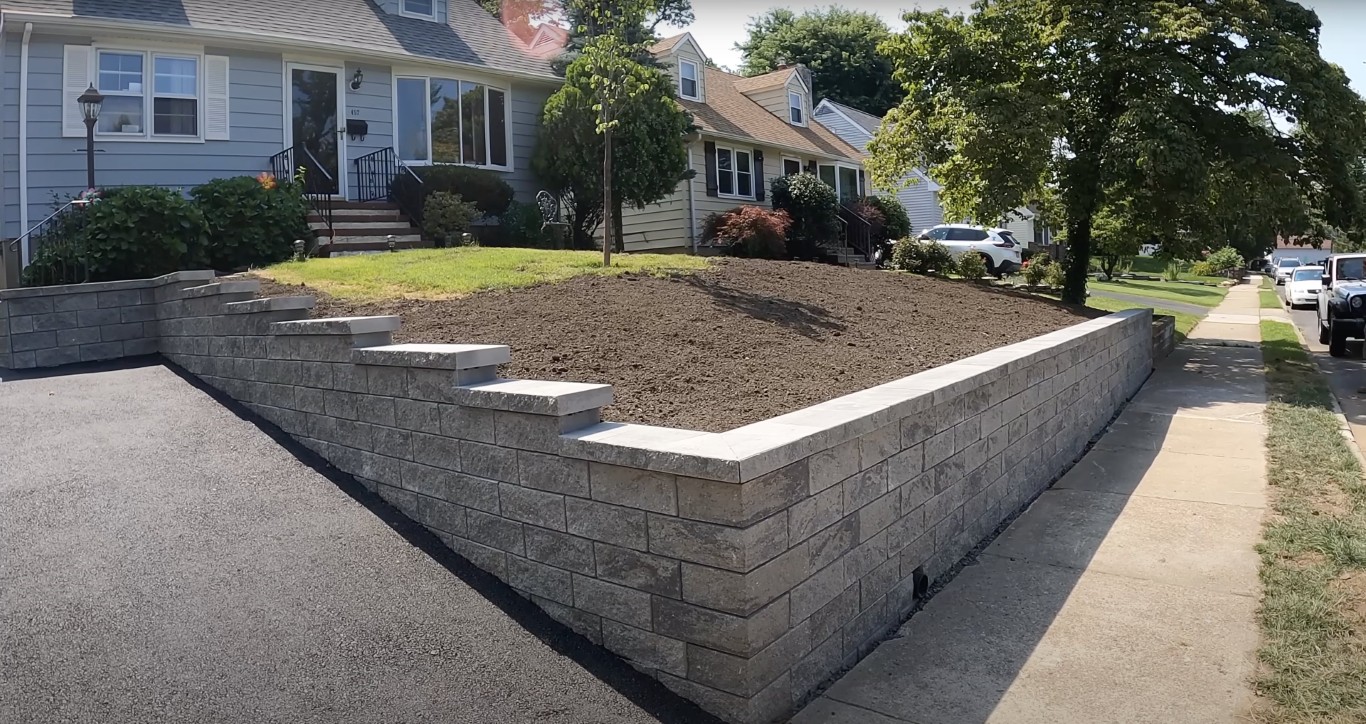
Segmental walls use interlocking blocks designed specifically for retaining wall applications. These systems are engineered to work together and come in various styles and colors. Segmental walls go up quickly, do not require mortar, and create attractive finished walls. They work well for heights up to about 6 feet and are popular for residential landscaping projects. The blocks have built-in setback that creates a stable, gravity-based wall system.
Decorative Masonry Walls
For walls that are as much about appearance as function, we build decorative masonry using natural stone, brick, or architectural concrete products. These walls become focal points in your landscape and add significant visual appeal. While more expensive than basic block or poured walls, decorative masonry creates a high-end look that enhances property value. We can incorporate curves, columns, caps, and other design elements that make your wall unique.
Critical Elements of Retaining Wall Design
Building a retaining wall that lasts requires understanding the forces at work and designing the wall to handle them. Several critical elements must be addressed or your wall will fail prematurely. Here is what goes into proper retaining wall design and construction.
- Foundation and Footing: Every retaining wall needs a solid foundation. We excavate below the frost line and pour a concrete footing that supports the entire wall. The footing must be wide enough and thick enough to handle the loads without settling or tipping.
- Drainage System: Water pressure behind a wall can cause failure even if the wall is structurally strong. We install drainage systems including perforated pipe, gravel backfill, and weep holes that remove water before it builds up pressure. Proper drainage is non-negotiable for long-term wall performance.
- Reinforcement: Concrete and masonry are strong in compression but weak in tension. We add steel reinforcement to handle tensile forces and prevent cracking. Taller walls may also need tiebacks or geogrids that anchor the wall to soil behind it.
- Backfill Material: The soil directly behind the wall affects how much pressure the wall faces. We use free-draining gravel for backfill rather than clay or soil that holds water. Proper backfill reduces pressure and improves drainage.
- Wall Batter: Most retaining walls slope backward slightly. This batter creates a more stable structure that leans into the soil rather than standing vertical. The amount of batter depends on wall height and design.
- Cap and Finish: The top of the wall needs proper capping to protect the structure from water infiltration and provide a finished appearance. We use appropriate cap materials that shed water and complement your wall design.
For walls over 4 feet tall or walls supporting significant loads, we recommend engineering analysis. An engineer calculates loads, specifies reinforcement, and certifies that the design is adequate. This protects you legally and ensures your wall meets code requirements. We work with local engineers regularly and can arrange engineering services as part of your project.
Building and Installing Your Retaining Wall
The construction process for retaining walls involves careful excavation, precise installation, and attention to drainage details. We follow a systematic approach that ensures your wall will be stable, properly drained, and built to last. Here is how we handle retaining wall projects from start to finish.
We begin with a site assessment where we evaluate your slope, soil conditions, drainage patterns, and what you want the wall to accomplish. This includes measuring the height of the wall needed, checking for underground utilities, and understanding property lines and setback requirements. If engineering is needed, we coordinate with an engineer to develop plans that meet structural and code requirements.
Excavation is the next critical step. We dig the foundation trench to the proper depth and width, making sure we reach solid, undisturbed soil. The excavation includes space behind the wall for drainage material. All excavated material is either hauled away or used to backfill other areas of your property. We keep the site clean and minimize disruption to your landscaping.
Foundation work establishes the base for your wall. We pour a concrete footing that is level, properly sized, and reinforced as needed. The footing must cure before we build the wall on top of it. For segmental walls, we install a compacted gravel base instead of a concrete footing. Either way, the foundation determines whether your wall stays level and stable over time.
Wall construction proceeds in layers or courses. For block and masonry walls, we build up course by course, checking level and alignment constantly. Reinforcement is placed according to the design, and cells are filled with concrete as we go. For poured walls, we build forms, place reinforcement, and pour concrete all at once. Every step is inspected to ensure quality and compliance with plans.
Drainage installation happens as we backfill behind the wall. We place perforated drain pipe at the base of the wall, surround it with gravel, and continue gravel backfill up the back of the wall. This creates a path for water to drain rather than building pressure. We also install weep holes or drainage gaps that allow water to escape through the wall face.
Finally, we cap the wall and finish all details. Caps protect the wall and provide a finished appearance. We clean up the site, dispose of excess materials, and leave your property ready for landscaping. Most retaining wall projects take one to three weeks depending on height and complexity. You get a finished wall that is ready to protect your property and create the usable space you need.
Frequently Asked Questions About Retaining Walls
Need a retaining wall for your property?
Contact us today for a site evaluation and detailed proposal.